


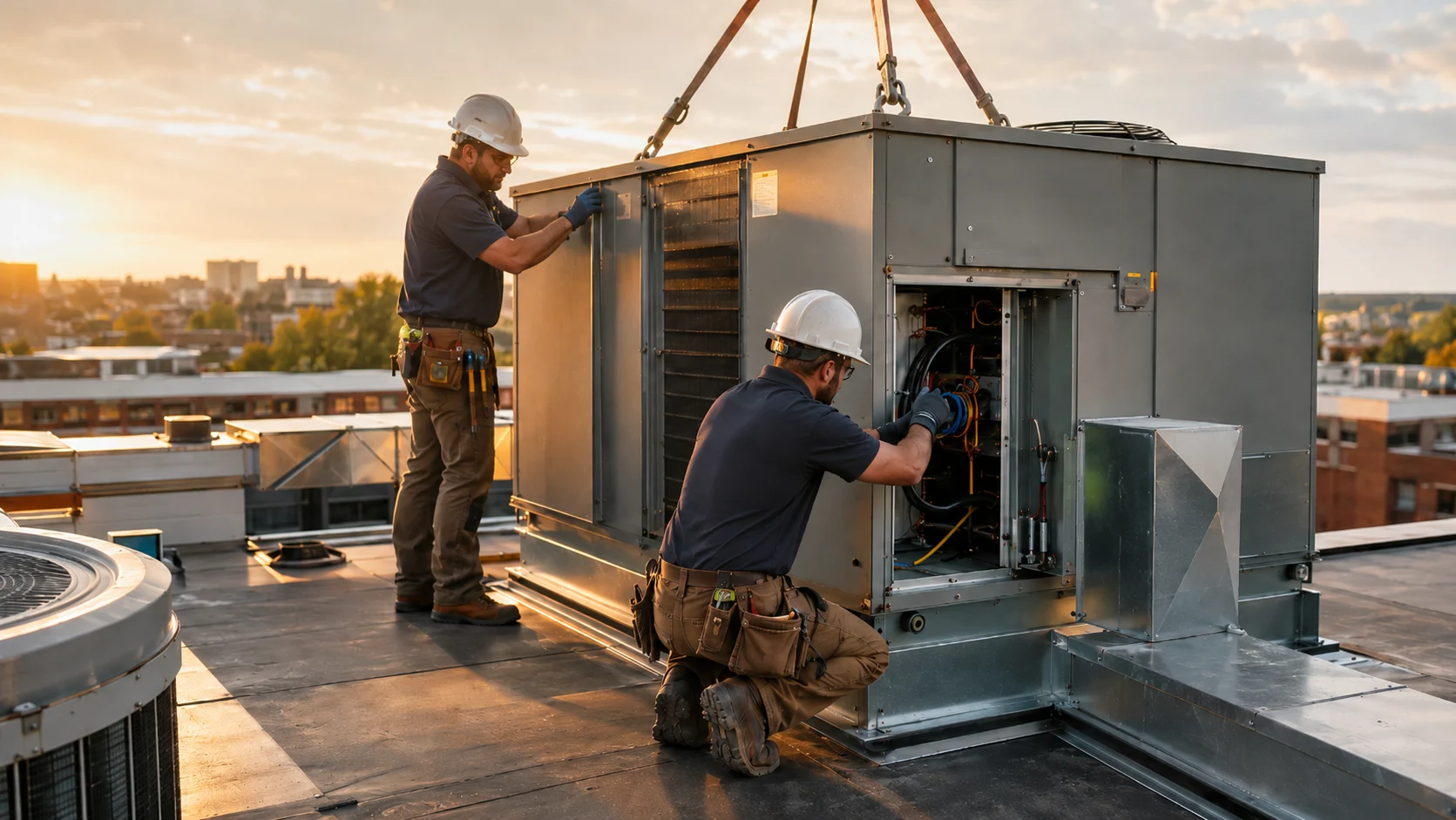
Job readiness in HVAC is one of the most underestimated margin problems in the trades. It doesn’t show up as a line item on your P&L. It shows up as a crew standing around waiting for a condenser unit, a service call pushed because the TXV valve is on backorder, or a new construction handoff that slips because ductwork and controls arrived on different trucks two weeks apart.
HVAC is a systems trade. One missing component shuts down everything downstream because the sequence only works in order.
What “Job Readiness” Actually Means for HVAC
The concept is simple: the right materials and equipment are on site or confirmed available before your crew is scheduled to be there. In practice, it’s one of the harder operational problems HVAC contractors face, because you’re coordinating variables that move independently of each other:
Any one of these can delay a job. When two or three miss at the same time, you’re looking at idle crew time, schedule penalties, and a GC conversation you don’t want to have.
Where Procurement Timing Breaks Down
The equipment lead time that didn’t make it into the schedule
A mid-sized commercial HVAC contractor wins a 12-unit rooftop replacement across six locations. The PM builds the schedule around 4–6 week lead times, standard at the time of bid. What he doesn’t account for is that two of the specified Carrier units are on extended lead due to a compressor component shortage, and the alternative is also running long because of a regional distribution backlog.
The equipment gets ordered on the right day. It just wasn’t the right equipment for the timeline. The RTUs show up three weeks late. The GC charges back, because the HVAC contractor controlled the specification.
This is a pattern, not the exception. Equipment availability is checked once, at the time of ordering and almost never monitored in the weeks that follow. The same dynamic plays out with refrigerant (price assumptions that don’t survive a mid-season allocation crunch) and with controls orders that arrive five weeks before the mechanical equipment they’re supposed to connect to.
In each case, the orders were placed correctly. The problem was that no one was tracking them against each other or against the schedule.
What It’s Actually Costing You
The direct hit is obvious: idle crew time, rescheduling, potential penalty exposure. But two costs are harder to see:
Estimating gets less accurate over time. When procurement surprises happen regularly, PMs build in buffer that isn’t in the bid but shows up in actual cost. Contractors who have procurement timing under control can bid tighter and win more work without taking on more risk.
Your distributor relationships aren’t as strong as they should be. If you have five techs buying refrigerant from four different suppliers with no visibility into combined volume, you’re negotiating from a weak position with all of them. The contractors getting best pricing aren’t necessarily buying more, they’re buying with visibility.
How Contractors Are Solving This
The HVAC contractors pulling ahead on job readiness aren’t adding staff or spreadsheets. They’re treating material and equipment availability as a tracked, real-time variable.
The difference between catching a problem early and finding out on job day usually comes down to one thing: visibility. Here’s what that looks like operationally:
This is where Agentic Procurement changes the equation.
Raiven connects HVAC contractors to 100+ suppliers including local and national houses, regional HVAC distributors, and equipment manufacturers, and uses AI to actively monitor availability, flag pricing changes, and surface alternatives when a primary source is delayed or repriced. Raiven doesn’t wait for a buyer to ask. It tracks open orders, monitors lead times, and surfaces supply risks before they reach the job site.
“The number one reason HVAC jobs go sideways isn’t what happens on the job site, it’s what didn’t get confirmed before the crew ever left. Equipment lead times shift, refrigerant availability changes by the week, and if your procurement isn’t tracking that in real time, you’re finding out about problems at the worst possible moment.” — Jay Foryan, HVAC Operations, Raiven
The Bottom Line
Job readiness isn’t a field problem. It’s a procurement problem that shows up in the field.
HVAC contractors who solve it aren’t doing more work to manage purchasing. They’re using better systems to make procurement timing a trackable, manageable variable, not a weekly source of surprises.
Raiven helps HVAC contractors build that kind of procurement operation. Through Agentic Procurement, Raiven operates as an extension of your team, reducing the friction between material availability and job execution, without requiring changes to how your field operates.
Get started with Raiven → raiven.com/contact-us
Raiven is an agentic procurement platform built for the trades. HVAC, electrical, and multi-trade contractors use Raiven to source smarter, buy at better prices, and keep jobs moving.